Phone:
(+966 55)839-0346
Physical address:
Jeddah, Saudi Arabia.
Phone:
(+966 55)839-0346
Physical address:
Jeddah, Saudi Arabia.
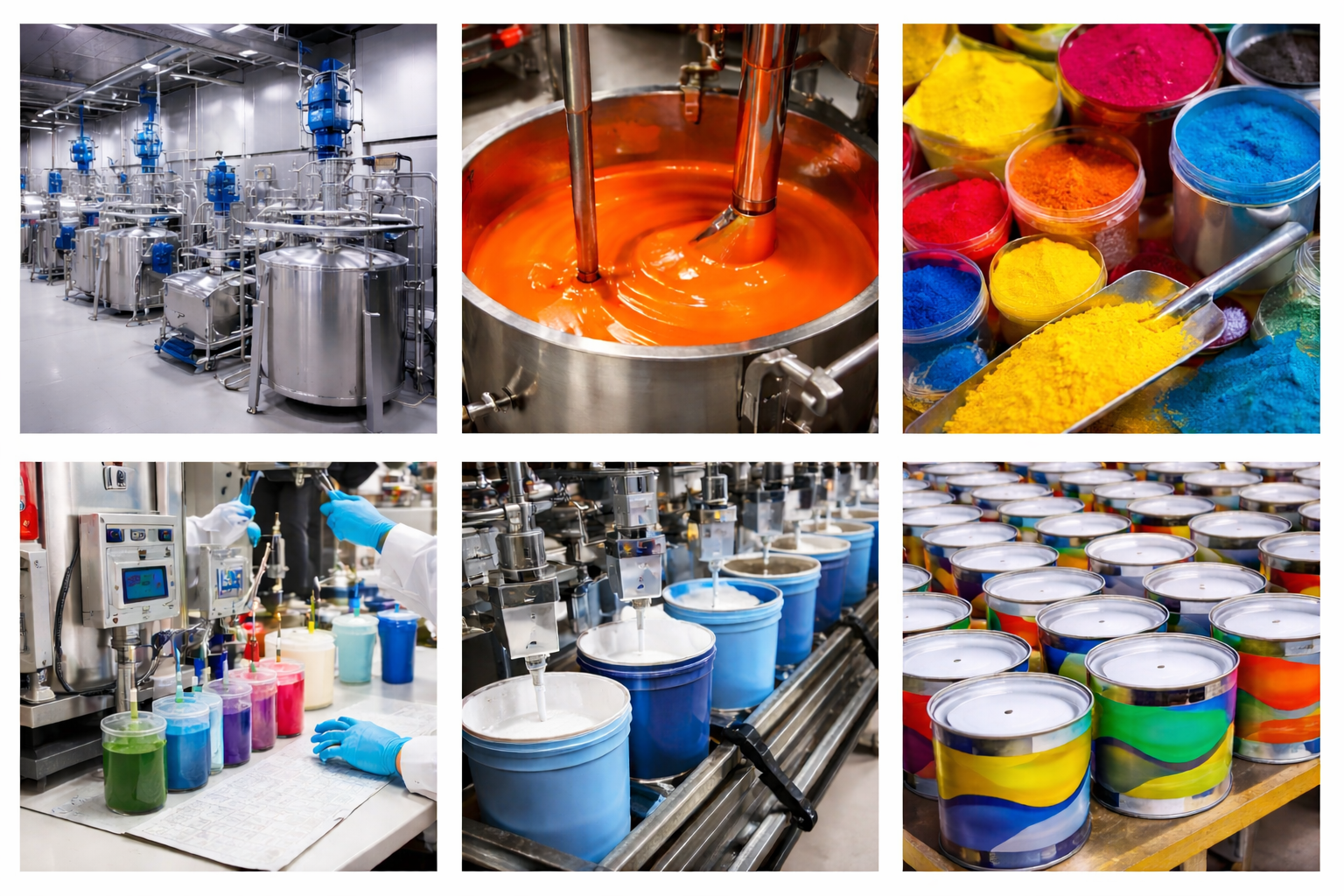
Starting a paint manufacturing business in Pakistan has become one of the most profitable industrial ventures in 2026. With rapid growth in construction, housing schemes, commercial plazas, and industrial development, the demand for decorative, industrial, and specialty coatings is increasing year by year.
However, many investors fail in this industry not because of lack of money, but because of poor technical knowledge, unstable formulations, weak quality control systems, and improper plant setup.
This complete guide explains everything you need to know to successfully start and operate a profitable paint manufacturing business in Pakistan.
Pakistan’s construction sector is expanding rapidly. New housing societies, infrastructure projects, and commercial buildings are continuously increasing the demand for:
Paint is a consumable product — meaning customers keep buying again and again. This makes it one of the best businesses for long-term stable profit.
Before setting up your plant, you must decide which category you want to enter:
Each category requires different formulations, machinery, and quality systems.
To start a paint manufacturing business in Pakistan you need:
Without proper documentation, banks and corporate clients will not work with you.
Minimum recommended area:
| Plant Size | Covered Area |
|---|---|
| Small Scale | 1,200 – 1,500 sq ft |
| Medium Scale | 3,000 – 5,000 sq ft |
| Large Scale | 8,000+ sq ft |
The location must allow industrial activity and chemical storage.
Basic machinery for a paint manufacturing business includes:
Choosing wrong machinery leads to low-quality paint and customer complaints.
Common raw materials include:
Raw material selection directly impacts paint quality, cost, and durability.
Formulation is the heart of your paint business.
Poor formulations result in:
This is where professional consultancy becomes essential.
Ibrar Paint Consultant provides custom formulation development, market-specific product design, and cost optimization strategies for manufacturers across Pakistan, Saudi Arabia, and other countries.
Quality systems must include:
Strong QC systems ensure consistent product quality and customer trust.
Minimum staff required:
Technical training is essential to avoid batch failures.
| Business Size | Approx Cost (PKR) |
|---|---|
| Small Scale | 15–25 Lakhs |
| Medium Scale | 40–70 Lakhs |
| Large Scale | 1+ Crore |
A strong brand makes your product sell faster.
Most paint businesses fail because of:
Ibrar Paint Consultant provides complete end-to-end support including:
If you are planning to start a paint manufacturing business in Pakistan, get professional technical guidance to avoid costly mistakes.
Ibrar Paint Consultant
📞 +966 55 839 0346
🌍 Global Technical Consultancy
📍 Jeddah, Saudi Arabia
Paint manufacturing is a highly profitable business — but only when done correctly with technical knowledge, quality systems, and professional formulations.
If you want your paint factory to succeed, grow, and compete with big brands, expert consultancy is not an expense — it is an investment.